
The Black School built their audience through physical presence and digital sharing
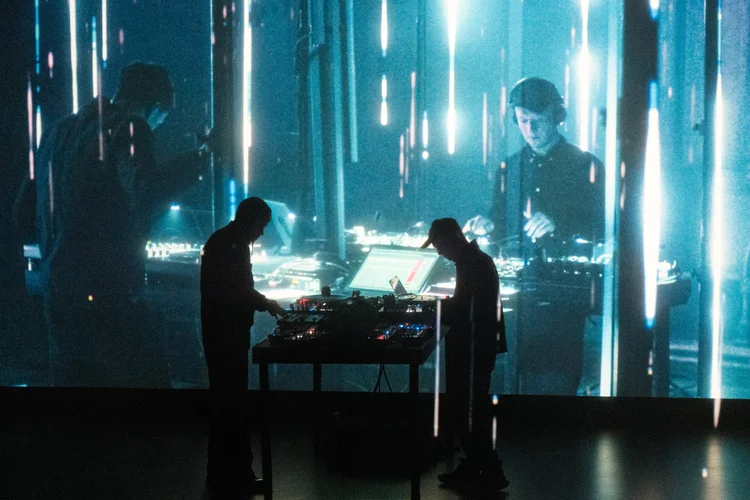
Since the beginning, Martin Højland and Simon Dokkedal, who make up Den Sorte Skole, have released their music themselves. It wasn't a strategic choice, but driven by energy and the will to share the music.
"We had a young DIY energy. Our music just needed to get out there, and we were more concerned about getting it heard by as many people as possible than capitalising on it or making a deal with a record label - it just wasn't a world we knew at all," says Martin Højland.
When The Black School released their first music, it was before streaming services had really changed the way music was consumed and while record labels were still acting as clear gatekeepers. Still, the duo chose to make their music freely available as free downloads on MySpace - a choice that was unusual at the time.
"It's not very special to make your music available for free today, but back then it was super special to release your music for free download."
Fans got a disc in their hands
In the beginning, Den Sorte Skole had more energy than they had knowledge. Self-releasing gave Den Sorte Skole freedom, but also meant that the duo had to take on all the tasks that would otherwise fall to a record label.
"You throw yourself into something where there are a lot of parts of the publishing process you don't even know about when you start," says Martin.
Whereas a record label typically provides a ready-made device, the duo had to create the structure for marketing, distribution and collaborations themselves.
"There are a lot of things where, as a self-publisher, you either enter into a lot of agreements yourself or take care of those tasks yourself."
For The Black School, this meant a lot of personal involvement - both online and offline.
"We printed 1,000 CDs - these were CD times back then - and then we went around the big cities in Denmark and handed them out, hand to hand," says Martin.
"And we printed flyers when we played concerts and handed them out."
For the two young artists, interacting with their new fans was a natural part of their work, without them seeing it as part of a strategy - for them it was about getting out there and playing their music.
But audience contact required direct encounters, live activity and ongoing relationships. Physical presence was not a supplement, but a prerequisite. And this is in line with what IFPI's report Engaging With Music from 2023 shows that live activity and direct fan relationships are a powerful driver of audience building and that engagement is not solely driven by streaming or algorithms.
At the same time, the duo spent a lot of time spreading the music digitally and being in direct dialogue with potential listeners.
"You have to be insanely engaged and proactive in communicating with listeners or fans or potential listeners. And be proactive in outreach."
A mini movement at Roskilde Festival
The digital accessibility quickly proved to have a big impact. The music was being shared without the duo even realising how far it had travelled.
"What happened for us back then was that we built a fan base that was far bigger than we realised," says Martin.
"It wasn't until we were at Roskilde and there were 15,000 people who knew our music that we realised how far our music had travelled."
According to Martin, a big part of the appeal was that the audience experienced having discovered The Black School themselves.
"People hadn't read about us in Gaffa or Politiken. They had discovered it themselves, or it was a friend from high school who had burned a CD for them," he says.
"I think they felt like they were part of something special - a mini movement."
Difficult to export abroad
However, self-publishing also had its limitations. This became clear when The Black School tried to build a career outside of Denmark.
On a European tour to support Trentemøller, the duo stood at the exits of venues night after night handing out download codes for their album.
"Our music also spread significantly around Europe there," says Martin.
Still, the duo experienced a big difference between their position in Denmark and abroad.
"It's been particularly difficult to get attention abroad because we weren't affiliated with a record label," he says.
"There was a big discrepancy in how big we had become in Denmark and then having to start all over again abroad - but without the narrative we had in the beginning."
Experience points to a familiar challenge for many self-publishers. Audiences can be built nationally through live activity, relational work and self-marketing. But according to the report European Music Exporters Exchange from 2023 international breakthroughs often require networking, funding and strategic co-operation between export offices across countries.
Make something you're proud of
Looking back, Martin believes that self-publishing should be demystified - but not underestimated.
"It was a lot of legwork on the ground," he says.
At the same time, he points out that the volume of music today places new demands on self-publishers.
"The internet doesn't forget, and many people have been at it for three years and have published more than we have in 20 years. And it's easy to leave a messy trail behind you. So it's about immersing yourself and making something that you're really proud of - and then going out and giving it everything you've got."
You can meet Martin Højland and other music artists on 5 March at the member meeting 'Your visibility and business as a self-publisher', where you can learn more about working as a self-publisher. Read more and sign up here.
What can self-publishers learn from The Black School?
-
Direct contact with audiences - digital and physical - creates stronger relationships
-
Self-publishing gives you control but requires a lot of effort and market understanding
-
Live activity and outreach are key drivers of exposure
-
International breakthroughs often require partners and specialised resources