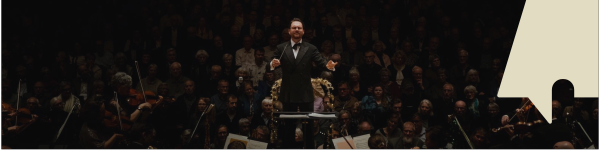
Phillip Faber received a payment demand for the use of a photo of himself
A Facebook post triggered a claim of 5,750 kroner against Phillip Faber. The media requested that the matter be closed, and it was. But his concern about new claims has taken hold. According to the Danish Artist Union’s lawyer, he is far from alone in similar experiences. Therefore, the union calls for clear agreements when using images, even if they are from an article or production in which you yourself are involved.
Of Julie Westh Nielsen
A few years ago, conductor, composer and singer Phillip Faber appeared in an article in one of the major newspapers. At that time, he used an image from the article in a Facebook post. According to Phillip Faber, the agreement was made via his then-DR email. That email is now closed, and he no longer has access to it and therefore to documenting the agreement from that time.
Now, several years later, a request came from the Copyright Agent with a claim of 5,750 kroner for the use of the image.
For Phillip Faber, the case was closed when he contacted the media. But the thought of all the other times he has used photos from articles in which he has appeared has left him feeling uncertain. He is concerned that more payment demands may come, and that his colleagues are not sufficiently aware of the same issue.
At the Danish Artists' Association, lawyer Nathalie Rothe is familiar with up to several similar cases:
”Today there are search robots that can easily scour the internet and find places where copyrighted images have been used. Therefore, we are seeing an increasing number of claims for compensation, and that is why it is important to have clarity about what the agreement on use actually covers. For even if you are the one in the photo, it is not automatically your image. Others may have rights to the image even if it is a photo of you,” explains Nathalie Rothe.
A closed case and an open question
Phillip Faber immediately contacted the Danish Artist Union's legal advisory service after the demand for payment landed in his inbox.
”I would have been able to document the permission and otherwise be prepared to pay,” they wrote. And that was difficult. I remember receiving the photo in connection with the article, but now that I no longer have access to that inbox, I can’t check what else was agreed upon regarding the use of the photo,” Phillip says.
Phillip then wrote to the journalist, the photographer, the media outlet, Ritzau Scanpix and the Copyright Agent. It was the editor of the media outlet who replied that the newspaper would ask Ritzau Scanpix to close the case. He then received a message from the Copyright Agent stating that the case has been closed.
The question is current again for Phillip. He tells about an agreement with a magazine regarding an interview and photography at his home. In the interview agreement, there is also this time an oral offer that Phillip can share the photos he wants to. An offer he would like to be able to accept without any doubt about what it covers.
“I myself live off my rights and have great respect for copyright, so my problem is the uncertainty surrounding the agreement I have experienced – and the fear of subsequent claims. How are we as contributors to know what we can use submitted images for if the framework is not explained? That would be very interesting, it became much clearer from the media’s side,” he says.
The Danish Artist Federation has asked the Copyright Agent how often the company makes payment demands to people who are themselves involved in the photos, and how it investigates whether agreements on the use have been entered into in advance. The Copyright Agent has not returned to the inquiries.
Clarify what you are allowed to use the image for
The legal department of the Danish Artist Union regularly receives requests from members regarding image rights. Here is the position: The union cannot help in cases where a member has infringed the copyright of others.
”The photographer, or the medium the photographer has made an agreement with, has, as a rule, the rights to the image. The fact that you are depicted, having the image file sent to you or having the photographer credit you, does not in itself give you the right to use it,” says attorney Nathalie Rothe.
The use of someone else's work requires permission from the person who has the rights, or can grant permission on behalf of the rights holder, and the association is happy to help advise you on this.
“Ask specifically about what you want to use the image for. A permission to post it on your website does not necessarily include an ad on social media or a concert poster. Get the agreement confirmed in writing so that you can document what you have agreed upon, how long the agreement lasts, and what it is limited to,” says lawyer Nathalie Rothe.
According to board member Lars Horn, the Press Photographers’ Association does not have its own written guidelines for the use of press images by participants, but refers to the copyright law. In his own business, he ensures that usage and pricing are agreed upon in writing:
”I always make sure that a written agreement is made about what the photo may be used for and what the price for the use is. Then everything is clear,” says Lars Horn, board member of the Press Photographers’ Association.
Get help if you are unsure
Although the law is clear in this area, that does not mean that agreements are always the same. And it is precisely this ambiguity that is the cause of most of the cases that the public is aware of.
Phillip Faber has accepted the federation's advice to have a clear agreement next time, but he still thinks the situation is associated with uncertainty for him.
”It’s impossible to guard against something like an agreement being stored in a closed email folder at an old workplace; so I find it unpleasant to live with—I could get the same claims again—even though there was actually an agreement about the use. But I’ll have a completely different focus on the agreements being clearer for the future after this,” he says.
An agreement is an agreement
Although it may seem complicated, according to Nathalie Rothe, a lawyer with the Danish Artist’s Association, you can take precautions by suggesting that your access to use the material be written down between you from the beginning.
”It might be a good idea to have verbal agreements confirmed in writing so that you can show what you have agreed upon. In our industries, there is not always a practice of long, comprehensive agreements because it often involves short collaborations or employment relationships. A verbal permission can also be valid, so the advice on formality is about being able to document what you have agreed upon,” says Nathalie Rothe.
The legal department of the Danish Artist Union can help you clarify what is needed if you want to avoid a claim. You can read more on our website eller contact the legal department by email.
Who is the Copyright Agent?
Copyright Agent is a company that helps photographers and image agencies enforce rights to images. Among the company’s partners is Ritzau Scanpix, which is Ritzaus image service. Copyright Agent handles cases regarding the use of images on their behalf.
According to the Copyright Agents own description, the company uses algorithms to find images online and compare the findings with its database. Customers can review the cases before Copyright Agent contacts the person who used the image and makes a payment claim for use that the company considers lacks permission.
If you have questions about the article or suggestions for content on Artisten.dk, you can contact journalist Julie Westh Nielsen by email here.