The authorities can observe artists' public lives
The Danish Artist Federation has received enquiries from artists who have experienced that articles or videos they feature in, Grafts is referred to or is entered into by the authoritiesKnotweed treatment. This article investigating, to what extent authorities must use the material, and What you as an artist should be aware of when sharing information about yourself in your work as an artist.
In this article meet two artists who storyteller Your historie. They are anonymous with fictitious names. The Danish Artists' Union is aware of their true identity.
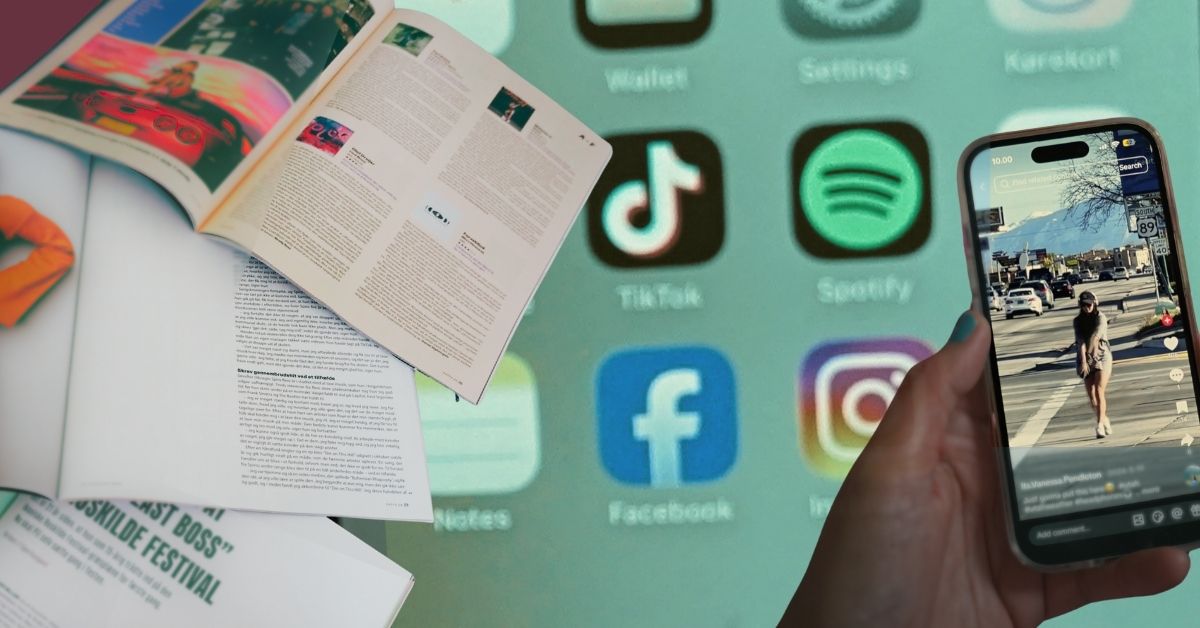
It came as rather a shock when the caseworker, who Hannah otherwise would have had a good dialogue with, told that she had been on Hannah's social media. Hannah had posted a video where she dancing in a traffic light for his single.
Whilst on sick leave due to stress, Hannah applied for a PR grant, which was to be used to hire someone to help her post videos on social media – a task she felt too far to carry out oneself.
“I experienced a great limitation in what I could do. I didn't have the energy for anything at all. ”At the same time, as an artist without permanent employment, you have to keep things going outwardly if you want something to come back to," explains Hannah, as at that point had been on sick leave for about a year.
Hannah remembers that she had emphasised the need for help in his/her application for the PR grant and at The video in question, which the case officer brought up during the meeting, was filmed on a day when she had a bit more energy.
Hannah telling her that had been out to The film took hours. The rest of the work on the video was handled by a social media consultant. Hannah, who had not been told that she was not allowed to be active on social media, became very choked, when the case officer gave her a clear answer.
"Hun said that it could ultimately be considered social fraud, and that you can't dance in the street if you're ill,”she says and adds that the shock – apart from the emotional aspect – lie in, that her attempts to keep the wheels turning were contrary to the rules of the system.
In the following days, Hannah experienced enormous anxiety, and what she describes as "Depressive symptoms". SThe caseworker's message felt like another intervention in the possibility of returning to their field.
"At the job centre have I On several occasions, I've encountered the idea that I should change industries because music was seen as something that could inherently cause stress, or was not a viable option at all. It has felt quite intrusive, as it's an attempt to move me away from music, which is both my work, my education and my identity,” says Hannah.
She experienced The job centre's lack of understanding and recognition of the music industry as a real and legitimate way of making a living. as an exacerbating factor in her sick leave due to stress.
Public information is used in case processing
As part of their artistic work, artists speak publicly about their art and their working process. This can be in the media or from the stage, but also on social media, which according to an investigation made by Danish Artist Union is a standard working condition for artists.
But how much may the public system use the information that comes from the artist's work around the art, if the artist themselves has published the information online?
Sten Schaumburg-Müller, professor of media law at the Faculty of Law at the University of Southern Denmark, states that authorities may use information in case processing if it is publicly available on an open profile:
“Because the information is publicly available, authorities may refer to it,” he says, stressing that authorities must not use covert methods to obtain information online:
“So they mustn't send you a friend request to gain access to relevant information,” says Sten Schaumburg-Müller.
He stresses that the public authorities cannot use the information as they please, and that information must be relevant to the specific case. And that might be harder for the individual case handler when they have to assess cases within the artistic labour market:
”The assessment must be made in relation to what applies to the individual, and that can probably be more difficult in relation to artists. It is possible that the current rules are inappropriate in relation to artists, but that would require a more in-depth investigation,” says Sten Schaumburg-Müller.
The dialogue with the system is essential
When a citizen receives a public benefit, it is as compensation for lost income. What you are allowed to do in this regard should be discussed with the paying authority.
That's how it sounds from Dorthe Korfitzen, who is an employment consultant at the Danish Actors' Association.
“As a general rule, you are not allowed to work if you receive sickness benefits. You receive this benefit because you are too ill to work. However, if you have agreed with your case manager that you will work to a certain extent, then you are allowed to,” says Dorthe Korfitzen.
It is the case manager who, in conjunction with the doctor, assesses whether a work task risks prolonging the period of illness, or whether it can contribute to returning to work.
“In the sickness benefit system, it is generally preferred that people gradually start to resume their work, if they are able, but this must be agreed with the case worker. This way, you can be sure that you will not encounter any problems with the municipality or your employer,” says Dorthe Korfitzen.
She adds that it is a good idea to contact your trade union if any doubts or questions arise during discussions with the authorities.
Knowledge of the artistic labour market
It is not new for the Danish Actors“ Association to help with the ”translation work" when it comes to public authorities understanding artistic work.
That's what chairperson Sara Indrio says, pointing out that the union has recently done a major piece of work concerning issues with calculating maternity benefits when one has a complex working life. Also during the Corona pandemic, the union's knowledge was crucial to the basis for the compensation schemes.
“There is much to suggest that the authorities generally lack knowledge of the reality artists work under. The many and varied working conditions are a prerequisite for us artists, and in our dealings with public authorities, we would like that awareness to be present at a more structural level,” says Sara Indrio.
Tal Figures from Statistics Denmark show that the average number of income sources for artists in 2024 was seven. This type of “patchwork economy”, and the conditions that come with the precarious labour market, should be more familiar to the system, she believes:
“For many, it's already an uncertain existence, and I would like to see a particular focus on upgrading the knowledge of SKAT, job centres, and other agencies that are meant to engage with and assist artists.”
Regarding the question of how Jobcenter Copenhagen relates to Hannah's experiences, answers The Employment, Integration and Business Services of Copenhagen Municipality written, that they have no comments on citizens' concrete experiences at the job centre.
In addition, they write, ”According to the Active Employment Act, the Job Centre's focus is to guide citizens in directions where they can achieve employment as quickly as possible, and thus full or partial self-sufficiency.”
Mental vulnerability online
Lisa had given a lot of thought to what it meant to be interviewed in connection with her new album.
It was important for her to break the stigma surrounding mental illness, which she herself had experienced when dealing with the hospital system and public authorities. The album itself was rooted in Lisa's youth – a time characterised by alcohol, parties, and a wild life in the music industry. But this was also before she knew she had ADHD.
During this period, she delved into songwriting and the darker side of rock music. Here, she used herself in the stories, but also created new narratives from the feelings that filled her.
“For me, it was a way to twist the words and narratives and get some emotions out. You draw from your own well and inflate the stories,” she says.
With her experience from psychiatry, her album and the interviews she gave became particularly important to her.
“I felt the need to point out that willingness to talk about challenges with diagnoses also includes taking responsibility for one's own situation. And that one isn't necessarily completely out of reach just because one is undergoing psychiatric treatment. But that's how one can sometimes be treated,” says Lisa.
She adds that artists and musicians have a unique opportunity to get close to the audience, where many different people experience getting a voice through an artist or performer:
“The stories in the music become shared because people find something to relate to. It becomes anything but ward E at Hvidovre Hospital. And I think that gives hope,” she says.
Lisa could not have imagined in her wildest dreams that years later she would end up at the Family Court in a case against her ex-partner regarding the residence of their shared child. But what has been utterly incomprehensible to her is that statements from the articles were included in a professional report held by the municipality.
In the notification, a psychologist Lisa's ex-partner has spoken to has mentioned the articles. They are used to substantiate that Lisa is herself aware of her psychological challenges and has spoken openly about them in a series of articles due to her work.
Do you regret speaking publicly about your health situation in connection with the release?
“That people refrain from discussing important topics for fear of the consequences, that is the very embodiment of what we need to address,” says Lisa, adding:
“But on the other hand, this whole ordeal has cost me and my children an enormous amount. And that makes me want to answer yes to that question,” she says.
What worries Lisa the most is the possibility that the stories from her lived experiences, which are included in the articles, will be used out of context. Although she wants to trust that the system will treat her fairly and only use relevant information, fear still plays a significant part when engaging with the system.
“The constant worry about whether information from the articles would colour my view of myself has been incredibly draining,” says Lisa.
According to Family Law Act Section 30 May the municipal authorities and the Family Law House exchange information about the parties in the case, if the exchange is considered necessary for the purpose of ascertaining what is best for the child.
Familieretshuset cannot comment on the specific case, but states the following in a written response:
“The central focus when the Family Law Agency processes applications regarding contact, residence, or parental responsibility is to shed light on the factors in the case that are relevant to the child's situation, including, for example, violence, abuse, or mental illness. Therefore, the Family Law Agency gathers information from relevant authorities and stakeholders, such as daycare institutions, schools, doctors, the police, hospitals, municipalities, etc. This type of information is included in the decision of a case. In our decisions, we do not place emphasis on mentions on, for example, social media or other media.”
Fear of the authorities should not be a concern.
The artistic life already comes with a certain degree of suffering. This is shown by several studies, including When Music Speaks Pt 1, which maps out that the proportion of musicians surveyed who exhibit moderate or high existential distress is greater than for Danes in general. Here, the difference can be seen particularly clearly for musicians under 40.
According to Sara Indrio, chairperson of the Danish Artists' Union, we must consider making the arts an attractive choice for new talents, and in that respect, how welfare systems relate to artists is of great importance.
“I am not concerned with the specific case handling, but with the principle that by speaking freely in and about one's art, one risks it being used against them in a case handling,” says Sara Indrio, chairwoman of the Danish Artists' Union.
She stresses that the artist works from an inner necessity and, in the creative phase, should not have to think about what the expression might lead to.
“We must not get into a situation where free art and personal considerations in individual cases are in conflict. And that is a shared task,” says Sara Indrio.
Isn't it a reasonable premise that someone speaking publicly has themselves considered that there might be consequences to publishing information?
“It might be fair if the artist had been aware of the risk in advance. At the very least, the artist should have the same protection as other citizens, and that requires better knowledge of our labour market,” says Sara Indrio.
Proper administration and duty to clarify the case
Just like information on public profiles on Facebook and TikTok, authorities can also read along when you, as an artist, express yourself in the media.
Whether information carries significant weight in a decision, however, is another matter, says Sten Schaumburg-Müller, Professor of Media Law at the Faculty of Law at the University of Southern Denmark.
“Because the information is publicly available, both the authorities and the opposing party in a child custody case are welcome to refer to it. However, when we look at the significance of the information, that's a different assessment that the current administration must make,” he says.
He stresses that information must be relevant to the case it is being used in, and that the public authority must take several considerations into account.
“On the one hand, the authorities have a general obligation of objectivity, where administration must be conducted objectively and properly. On the other hand, they have an obligation to investigate a case where they must make a decision. And if they can access public information, they may use it – but only if it is relevant,” says Sten Schaumburg-Müller, professor of media law at the Faculty of Law at the University of Southern Denmark.
FURNITURE
Data Protection ActSection 7, paragraph 1, states that information concerning racial or ethnic origin, political, religious or philosophical beliefs, trade union membership, and health or sex life shall not be processed.
However, this rule does not apply if the processing relates to information that has been published by the data subject him/herself(Section 7, paragraph 2, number 3). […]
Although information is publicly available, it is not a given that a public authority is permitted to process the information. The provision inData Protection Act§ 5 on good data processing practice also applies to published information.An authority may still only obtain and use information that is relevant and factual in relation to the case..
SourceWhen Authorities Use Publicly Available Personal Data, The Parliamentary Ombudsman
Written by trade journalist Alberte Silberbrandt.