Only three of 26 artists at Køge Festuge are women: Danish Artist Union calls for shared responsibility for the long haul
The gender distribution on Køge Festuge's music programme is yet another example that there is still a long way to go to achieve equal access to the country's stages. The task can be difficult and sometimes time-consuming. The entire music scene must take shared responsibility if development is to move forward, believes the chairperson of the Danish Artist Union, Sara Indrio.
By Julie Westh Nielsen
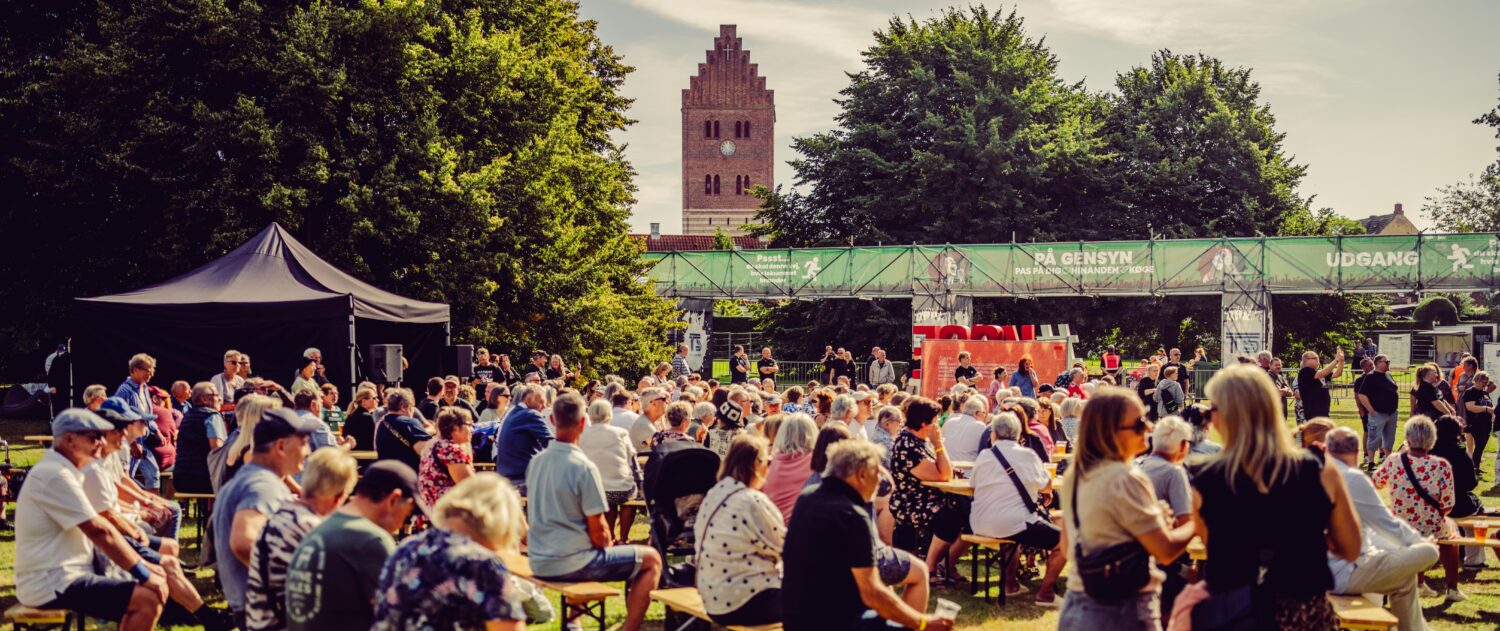
Only three of the 26 artists on this year's lineup for Køge Festuge are women
That equates to 11.5 per cent of the programme.
The uneven distribution has Culture Monitor sat focus on, and according to the artists' chairperson, Sara Indrio, it shows that the music industry still has a shared task in creating more equal access to the stages.
“It is a mandatory task to ensure equal access to Danish stages. It's not just for the sake of the artists, but also so that audiences get to experience some of what they don't know,” says Sara Indrio, chairperson of the Danish Artist Union.
The gender balance is therefore not solely about the numbers on the individual festival poster. Who gets booked also affects which artists get the opportunity to meet an audience, develop their live career and become the bigger names that organisers can book later on.
The entire music scene must pull together
Køge Festuge itself admits that the gender distribution is not as the organisers could wish.
The festival points to an unusually short planning horizon, among other things. Due to several years of uncertainty regarding the festival's location, the organisers were only able to finalise agreements with artists at a late stage. At the same time, the festival is taking place late in the festival season, when many artists are already booked or have other plans.
According to Køge Festuge, attempts have been made to book Mille, Saint Clara and Annika for this year’s programme, amongst others, but these requests were turned down due to a lack of availability. The three female artists on the programme are Birthe Kjær, Berg and Gry. In addition, the band Halberg has two female members.
Chairperson Sara Indrio acknowledges that working on gender balance can be complex, not least for smaller operators with fewer resources. But precisely for this reason, the responsibility cannot be placed on individual festivals or venues alone.
Festivals can help build new names
Part of the challenge is that the gender balance is already skewed earlier on in the music industry’s value chain. Women continue to make up a smaller proportion of professional musicians and performers, and the biggest commercial names are therefore not distributed equally either.
However, this makes the task of deciding who is granted access to the stages all the more important.
Big, well-known names are crucial to the finances of many commercial promoters. At the same time, however, venues and festivals can play a role in giving new artists the opportunity to grow.
“The commercial operators sell tickets based on the well-known names, and that dynamic makes it difficult to back acts who have a smaller audience behind them. Venues and festivals can take chances to a greater extent and help build up a live act, and I would like to see more of that,” says Sara Indrio.
Among other things, this means taking a broader view of the emerging scene and being aware of which artists are being given the opportunities to take the next step.
The aim is to achieve a better balance by 2030
The Danish Artists’ Union, together with other organisations in the music industry, has drawn up joint gender balance targets for 2030.
One of the objectives is that programming and curation at, amongst other places, festivals, venues, concert halls and on state-funded radio should reflect a commitment to gender balance. As a benchmark, a ratio of at least 70/30 has been used as a guide.
Things are moving in the right direction in many areas of the music scene, but the figures also show that there is still a long way to go.
“I think we must acknowledge that there are many who are still working on how to specifically resolve the challenge. It is going better, but we are not there yet” says Sara Indrio.
The Danish Artists’ Union is calling on stakeholders in the music industry, amongst others, to get involved in the Music Industry Partnership for Sustainable Development, through which the industry shares knowledge and experience of its work on issues such as diversity and equal access.
Read more here om how the Music Industry Partnership for Sustainable Development is to promote a sustainable music industry.
The joint 2030 gender balance targets can be found her.
The report is available to read her.